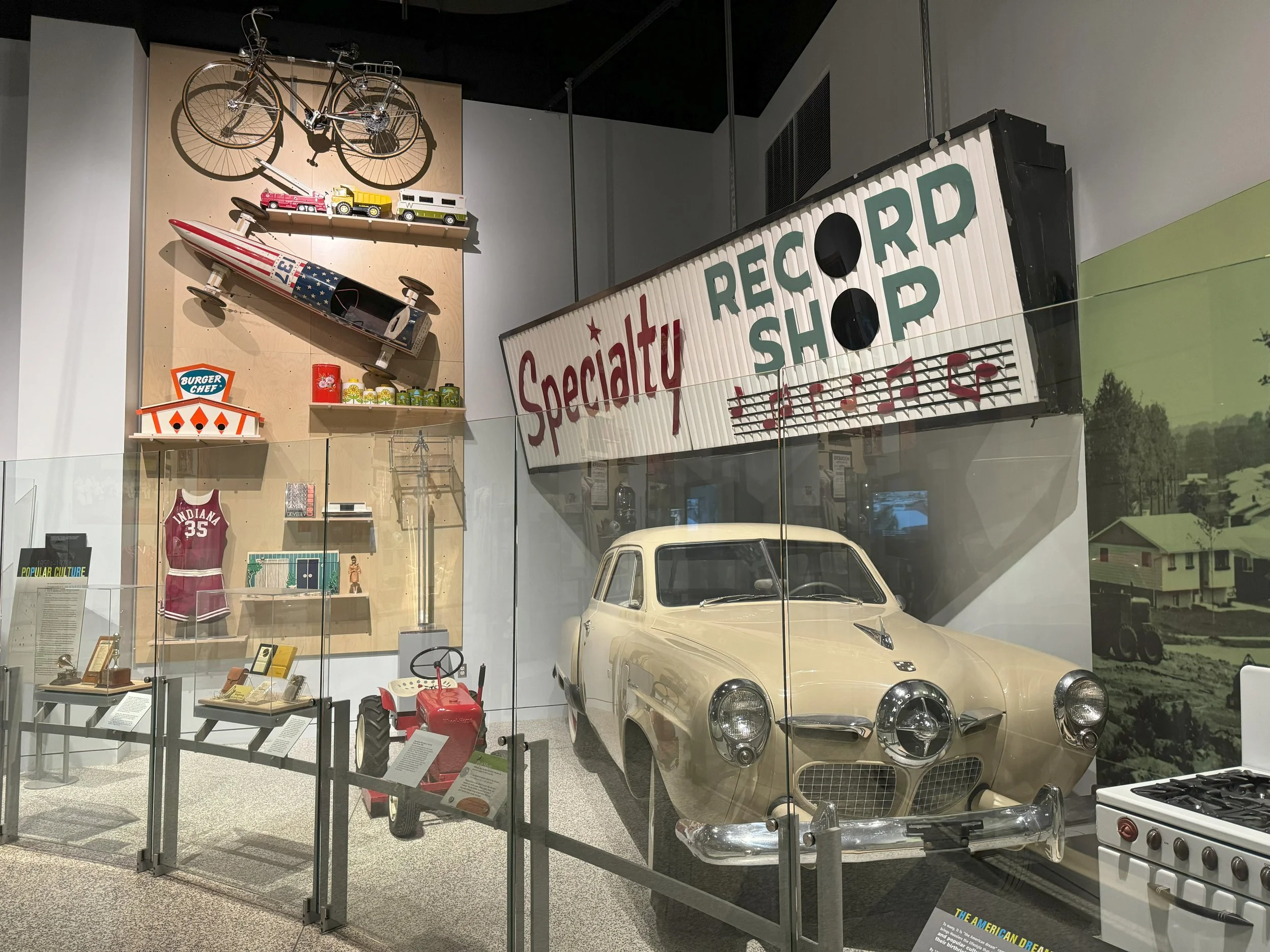
Indianapolis, Indiana
We make a big drive for Game 6 of 23 to Indianapolis, Indiana. After stopping to see the local monuments, we visit the Indiana State Museum.
Making a schedule for a determined and relentless ballpark road trip — one in which you endeavor to see a different team in a different ballpark each and every day for three solid weeks — will eventually mean a couple of Big Dumb Drives. Your itinerary will have 10 excellent days of fortunately connected ballparks before needing to zag across the map for four or five hours to connect to the rest of the route.
In our case, we needed to travel northwest to see the Beloit Sky Carp for Game 5 before doubling back southeast to see the Indianapolis Indians for Game 6.
We had a lot of nice drives on this road trip, but this was not one of them. We spent tedious time navigating construction and traffic in the corridors of concrete south of Chicago. Then things opened up a bit, and by mid-day we were in Lafayette, Indiana. The town is home to the Lafayette Aviators of the collegiate Prospect League, a league we would encounter later in Springfield. Our goal was a quick lunch, so we stopped at Christos New City Grill for a terrific Reuben and were soon back on the road to Indianapolis.
When we arrived in the capital of Indiana, we stopped at several landmarks downtown, including the Indiana War Memorial & Museum (dedicated to soldiers who died in World War I), the neighboring Veterans Memorial Plaza (or Obelisk Square), the state capitol (built in 1888), and the Soldiers & Sailors Monument (originally built to honor Hoosiers who served in the Civil War but now memorializing soldiers from other wars of the 18th and 19th centuries).
Indiana War Memorial and Museum
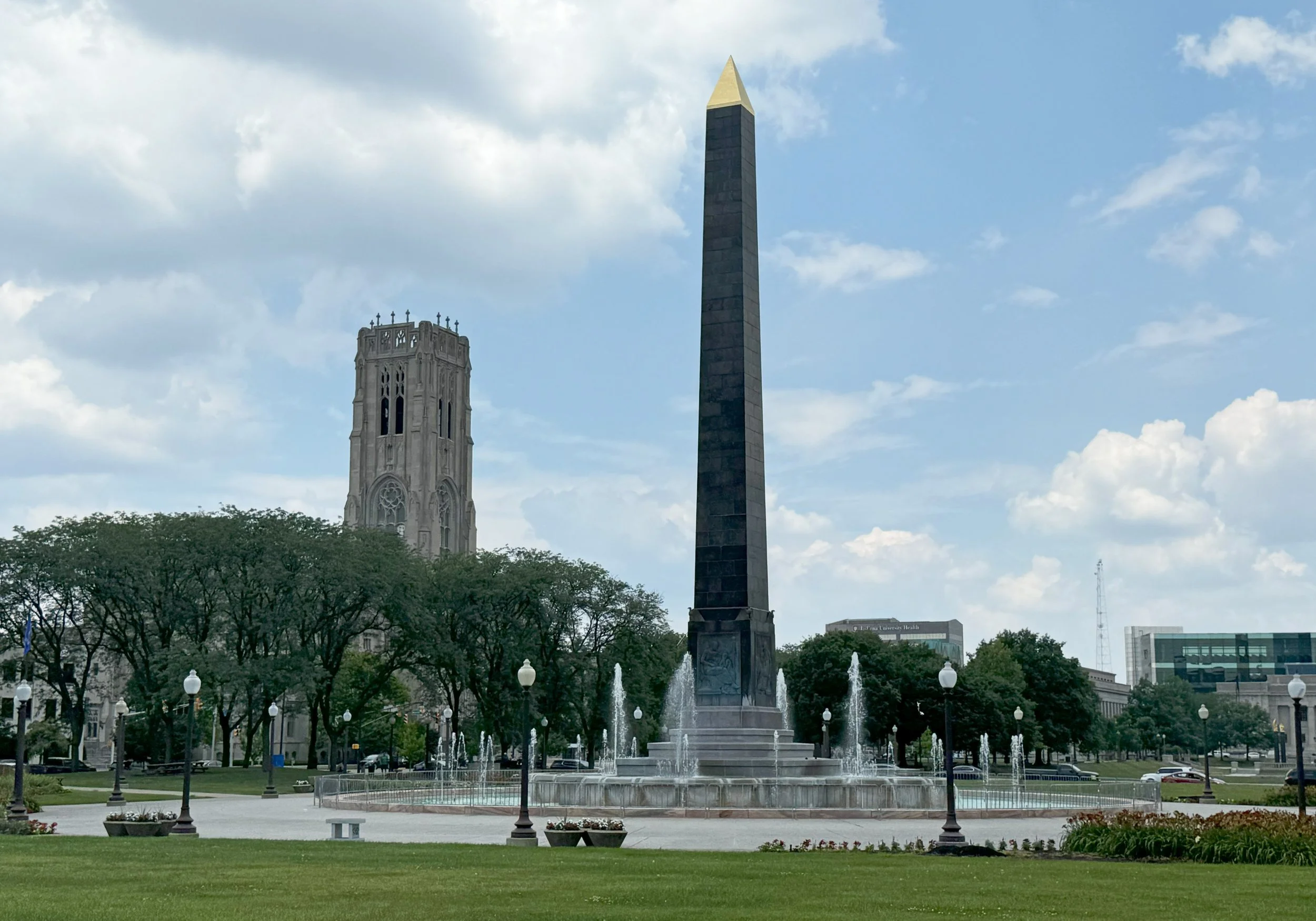
Veterans Memorial Plaza
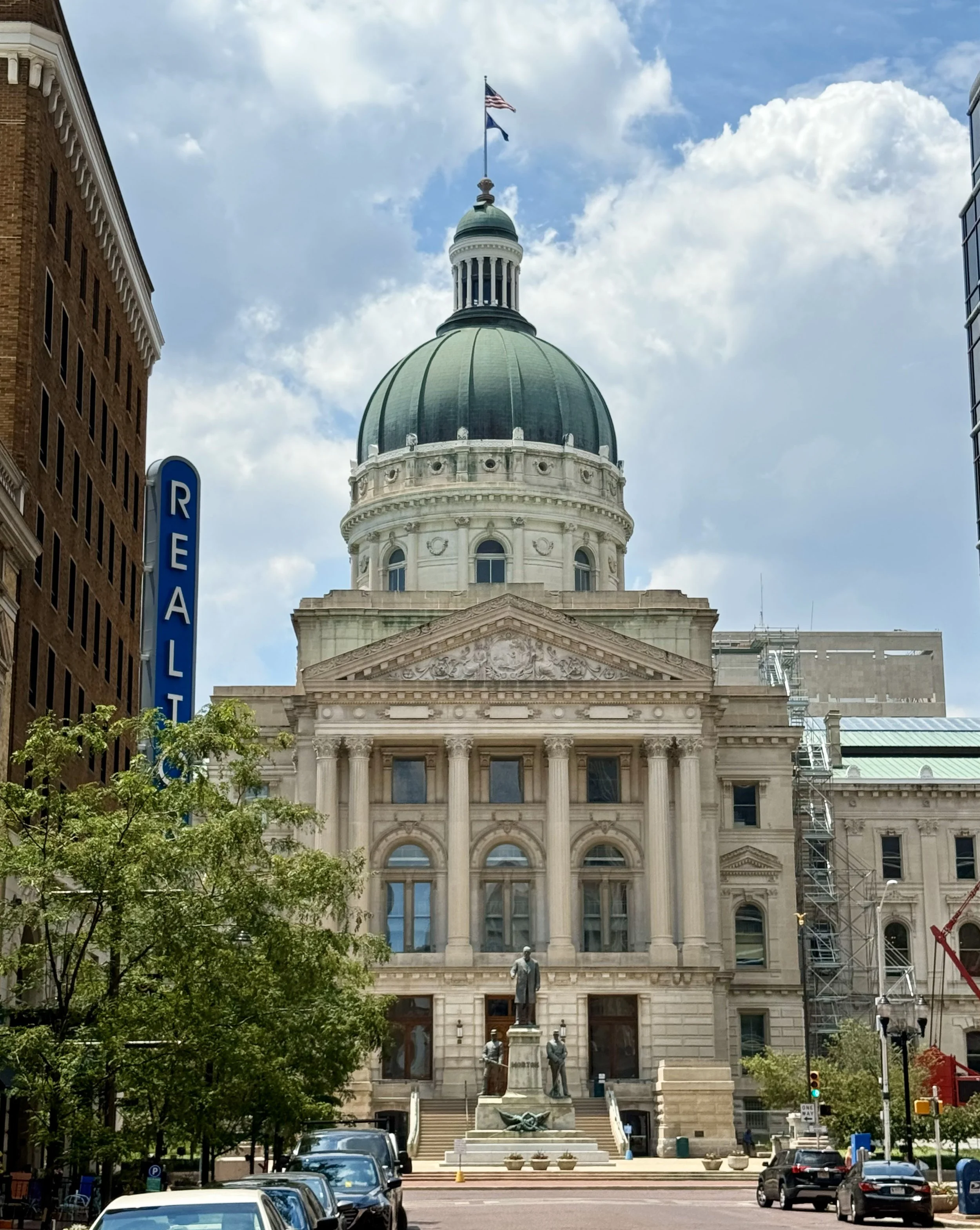
State Capitol
Soldiers & Sailors Monument
Indiana State Museum
We made our one sightseeing stop in town at the Indiana State Museum, which covers the history, culture, science, and art of the state from prehistory to the present day. A steam clock near the front door welcomes visitors with eight brass whistles that play "Back Home Again in Indiana."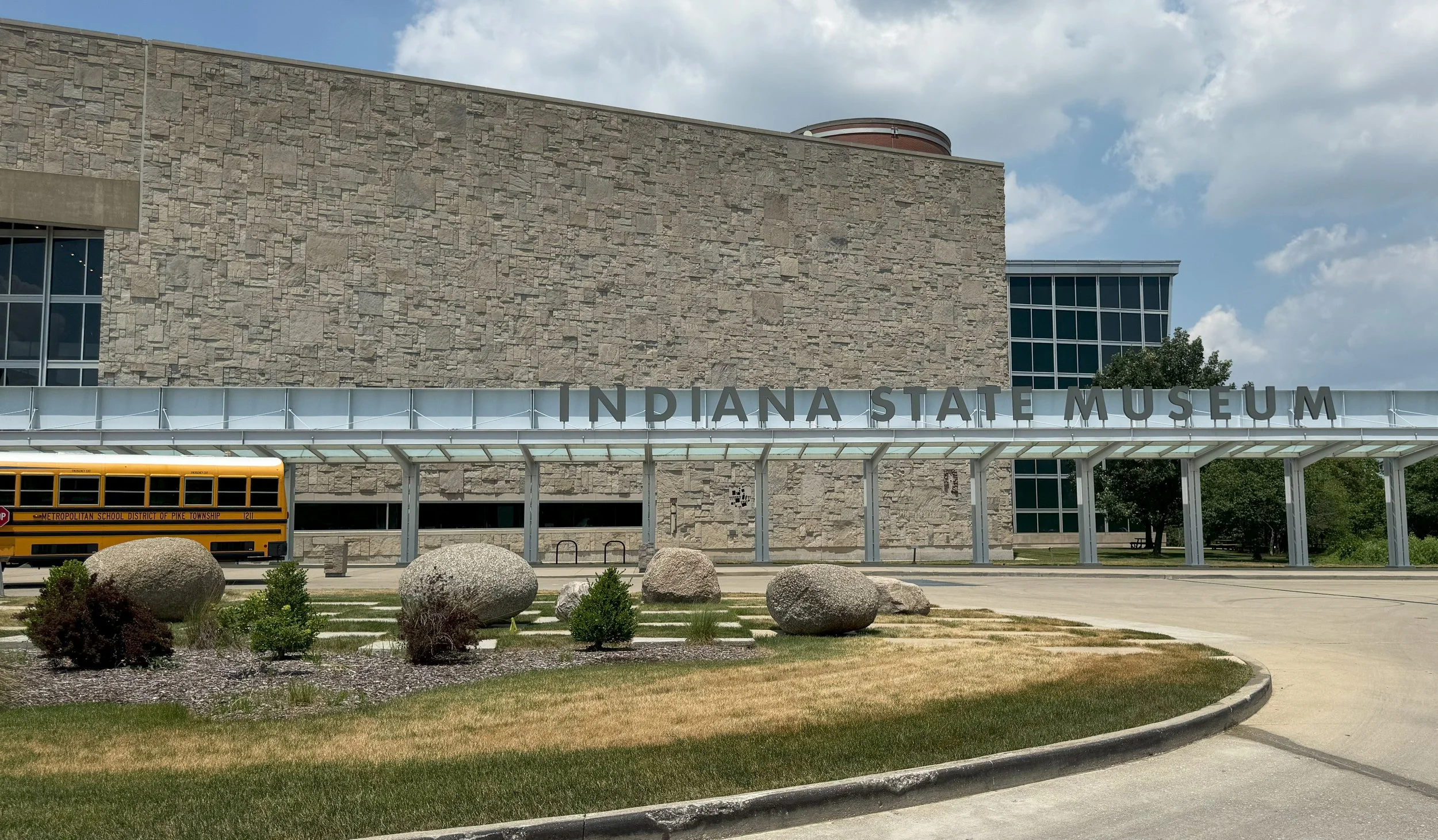
Exhibits in the museum trace the history of the nomadic Paleo-Indians of 8000 BC, who hunted mastodons and made stone tools; later indigenous tribes of the Archaic and Woodland periods who began to settle more permanently; and the subsequent Mississippian culture that arose around 1000 AD and collapsed just before the arrival of Europeans.
Those Europeans were French — first explorers, then fur traders, and finally soldiers and settlers. France ceded the area to the British in 1763 following the French and Indian War. After the American Revolution, the land became part of the vast Northwest Territory claimed by Congress in 1787, encompassing modern Wisconsin, Illinois, Michigan, Ohio, and Indiana. A good chunk of that became known as Indiana Territory in 1800, and in 1816, Indiana became the 19th state in the Union.
Other exhibits explore natural history, pioneer life, the state’s automakers, its impact during World War II, the contributions of its African-American citizens, basketball, the Indianapolis 500, and celebrity locals such as James Dean, Steve McQueen, Larry Bird, Michael Jackson, and David Letterman.