Kansas City Morning
Dad and I start our sightseeing outside the National World War I Museum and Memorial, then visit the outstanding Nelson-Atkins Museum of Art.
Day 1 began with a light drizzle and the very real threat of a canceled day game — a morning of gray foreboding for a baseball road trip six months in the planning.
Dad and I drove back into Missouri and through downtown Kansas City, which was quiet on this rainy Sunday morning before Memorial Day. We stopped first at the National World War I Museum and Memorial, America's only public museum dedicated to World War I. It would not open until noon, when we needed to be at the ballpark, so we would miss this intriguing attraction. We looked up through our windshield wipers at Liberty Tower, which rises 265 feet above the museum and features four “Guardian Spirits” representing Honor, Courage, Patriotism, and Sacrifice.
I hopped out of our car and jogged into position to quickly snap a few photos through a sea of American flags as workers nearby unloaded stages, stands, and other equipment for the Memorial Day celebration the next day.
Later in the trip, we learned that the Patriot Front — a fascist, antisemitic, white nationalist organization formed from remnants of an earlier neo-Nazi group — made an appearance at the museum on Memorial Day with about 100 members. Two U-Haul trucks drove up, and the masked cosplayers marched out like toy soldiers. They formed their formation, shouted their hateful nonsense for a bit, then demonstrated their zeal for freedom and individualism by marching back up the truck ramp in their matching outfits and packing themselves tightly in the back of the U-Haul with dozens of other troubled souls.

We drove on, heading south through the city to the Nelson-Atkins Museum of Art. Its impressive collection of works from around the globe numbers more than 40,000 and spans 5,000 years of human history. And it’s free!
As we arrived, the rain strengthened. Our ballgame edged closer to peril.
We paused for a moment to take in the museum’s main building, constructed in 1933 in the classical Beaux-Arts architecture style and modeled after the Cleveland Museum of Art. Just in front stood one of the four Shuttlecocks that are propped up in spots across the grounds, each more than 19 feet high and weighing 5,500 pounds — the works of Claes Oldenburg and Coosje van Bruggen, a husband-and-wife team who specialized in large-scale public art sculptures.
Claes Oldenburg & Coosje van Bruggen, The Shuttlecocks, 1994
We parked in the garage and ascended into the Bloch Building, an architectural showcase built in 2007 for contemporary and modern art. I procured a cart and driver for Dad, and we went our separate ways through the museum.
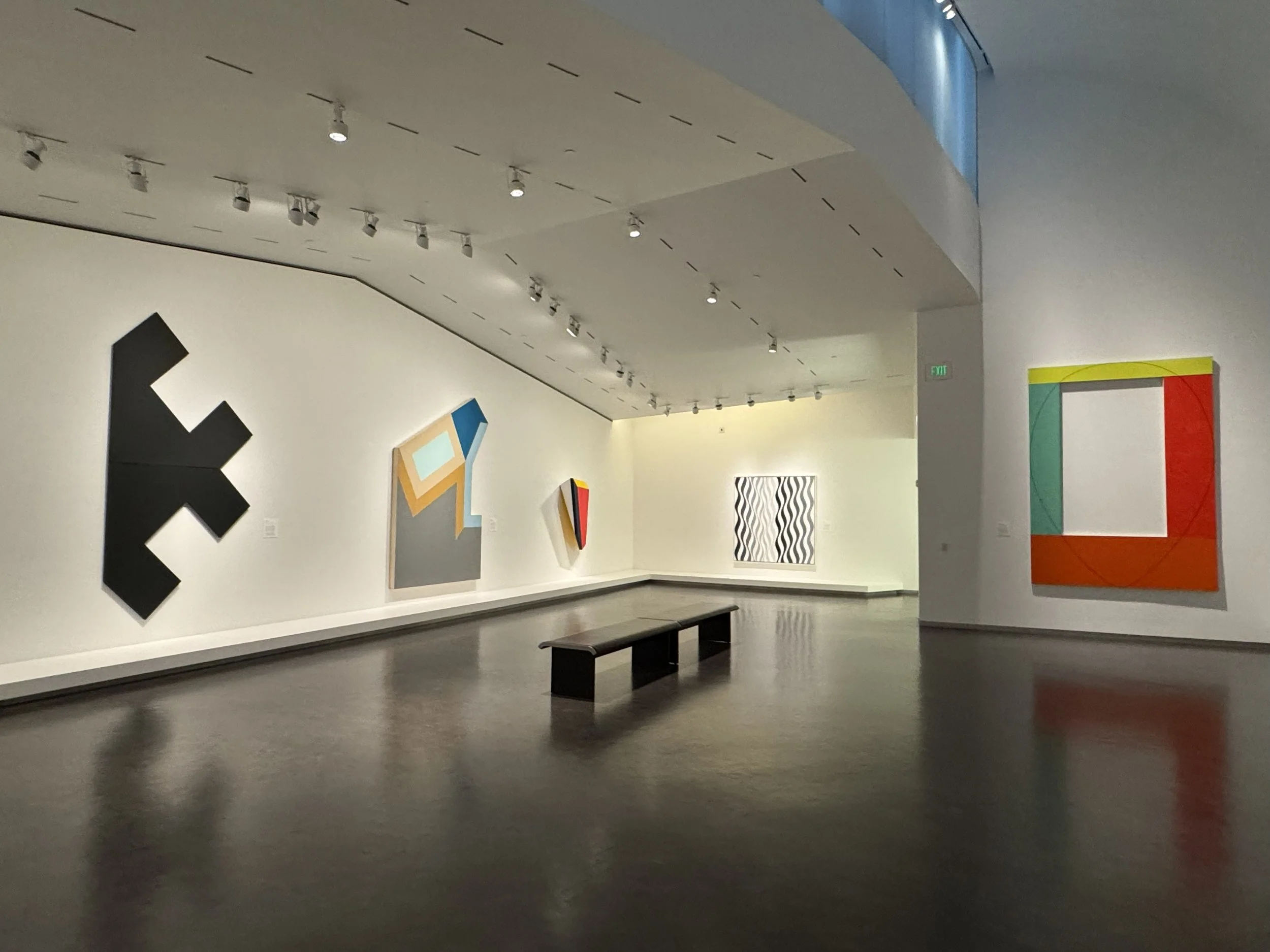
Roy Liechtenstein, Still Life with Brushes, Shell, and Star Fish, 1972
Jeff Sonhouse, Return to Sender, 2018
I stopped for Radcliffe Bailey’s Mound Magic, a 14-foot-wide, baseball-diamond-shaped, mixed-media marvel made of canvas, paper, wood, cardboard, cloth, Plexiglas, baseballs, paint, feathers, and more. At its center is the number “25,” honoring legendary Negro Leagues pitcher Satchell Paige, who wore the number while playing with the Kansas City Monarchs in the 1930s and 1940s. The work also references cities from the American South, African countries, Voodoo, and traditional African “power objects” believed to influence the future. Bailey’s piece reflects the history, culture, spirituality, and identity that came together uniquely on the fields of the Negro leagues.
Radcliffe Bailey, Mound Magician, 1997
After some time strolling about, I realized that most of the museum’s impressive collection was in the main building and that we had to exit the Bloch Building to get to it. I looked around for Dad to give him the news, but could not find him. I pressed on into the main building and saw that I had some real work to do to see the remaining galleries before we had to leave for the ballpark.
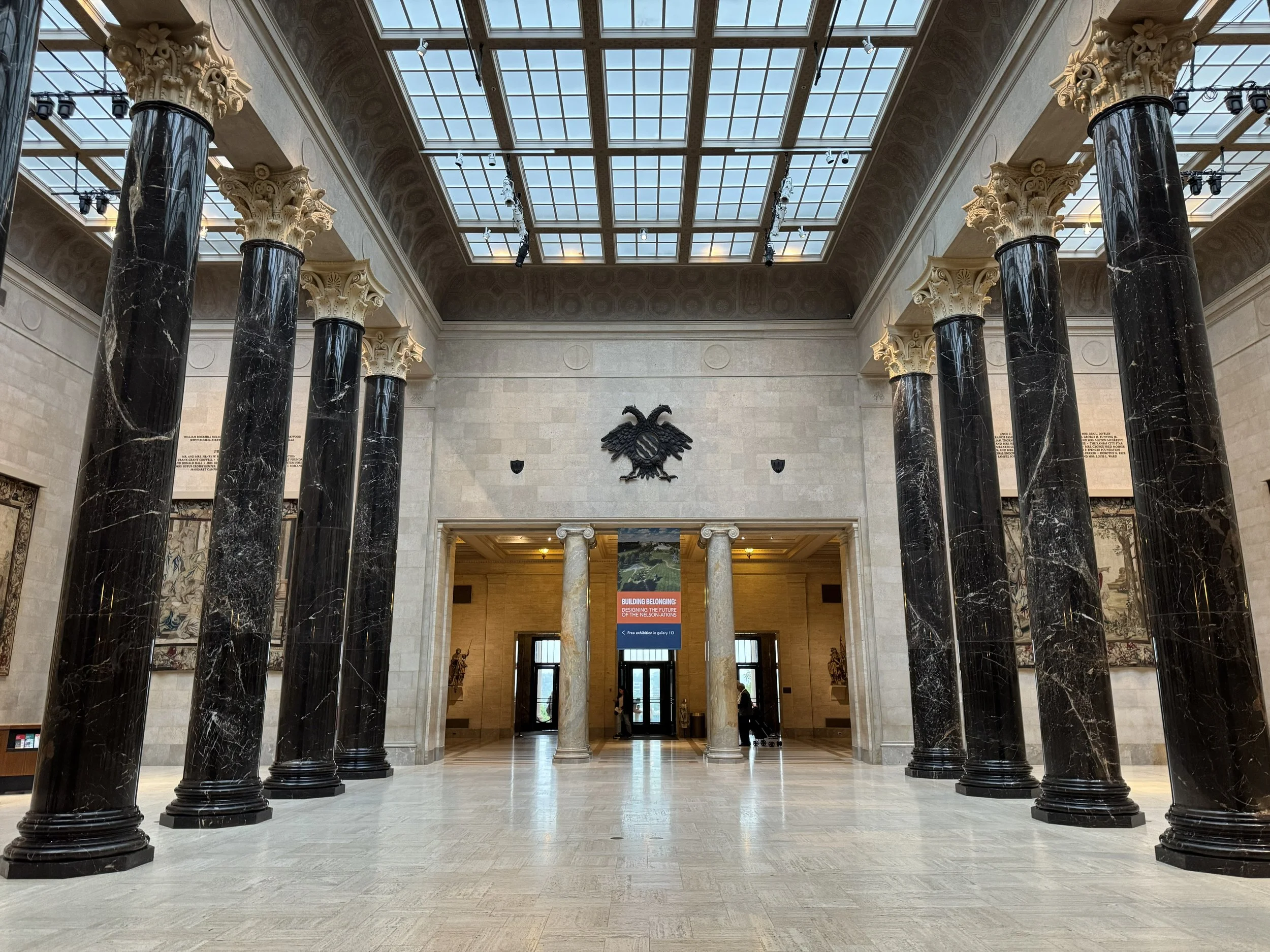
I soon found the master of the Dutch Golden Age, Rembrandt van Rijn, whose Baroque masterpieces dealt so much in darkness and tenuous illumination.
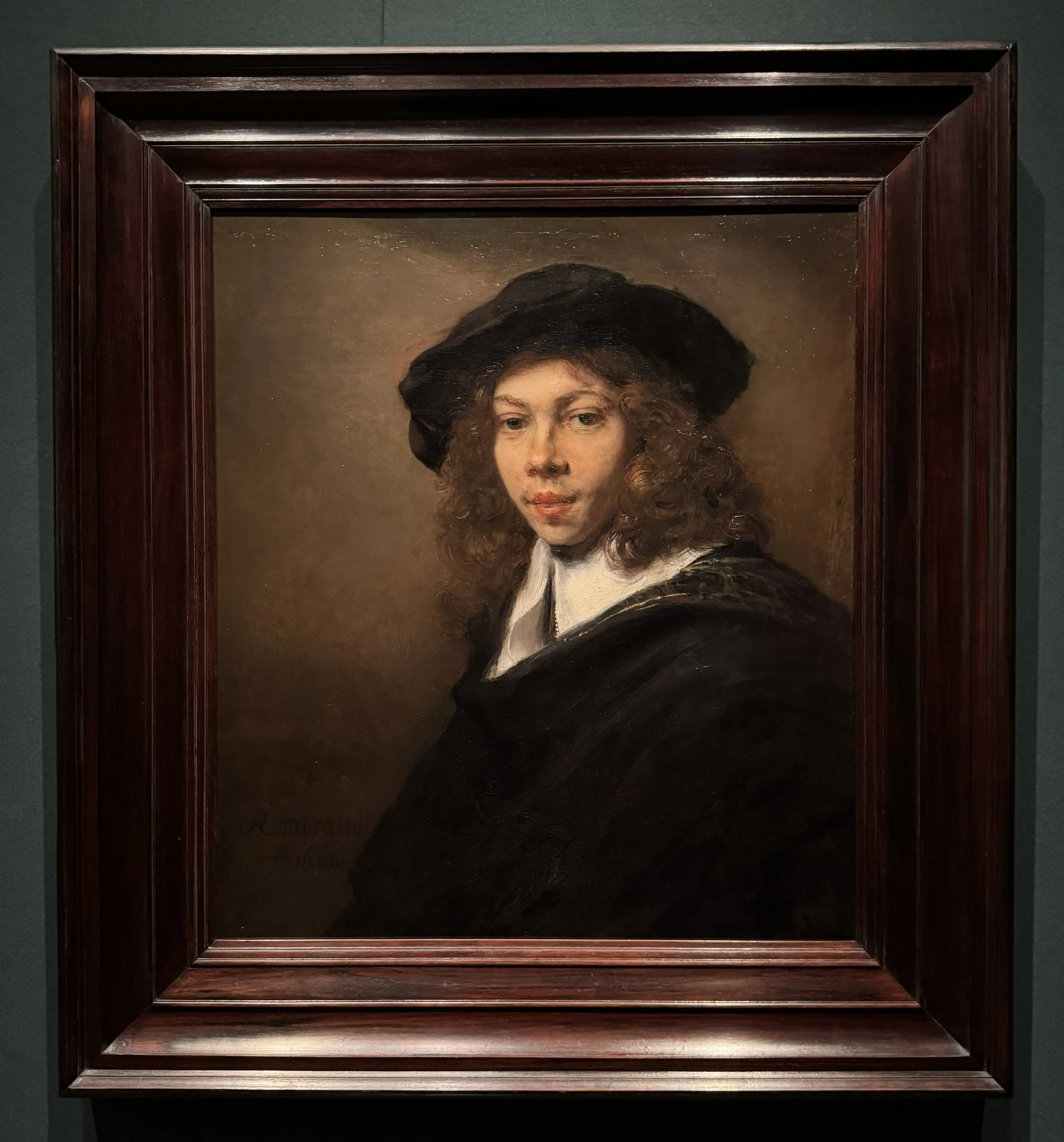
Rembrandt van Rijn, Young Man in a Black Beret, 1662
Not long after, I came across the paintings of the impressionists — Rembrandt, Monet, Renoir, Cézanne, Pissarro, Degas, Sisley, and more — bursting with delicate color and light.
Paul Cézanne, Mont Sainte-Victoire, about 1902-1906
Claude Monet, The Church at Vétheuil, 1881
Claude Monet, Water Lillies, 1915-1926
Camille Pissarro, Poplars, Sunset at Eragny, 1894
Claude Monet, Boulevard des Capucines, 1873-1874
The main building of the Nelson-Atkins has nearly 60 galleries across two floors. I checked the time and picked up the pace, wishing the museum had opened an hour earlier. That might have given me a fighting chance to take in some of the abundant ideas and techniques of expression the human mind has conjured around the world and across five millennia.
But in truth, the Nelson-Atkins deserves even more than that. It’s a first-rate museum, with so much to see — Renaissance and Rococo; Medieval tapestries, armor, and an elegant cloister; sculpture from some of the earliest monumental works in the Old Kingdom of Egypt to modern Native American art; rooms devoted to Egyptian, Roman, Chinese, Japanese, South Asian, Native American art, and more. I whizzed past far too much of it to keep to our schedule.
Roxanne Swentzell, Kosha Appreciating Anything, 1997
Marcel Duchamp, Marcel Duchamp Cast Alive, 1967
Even the second-floor view of the museum’s Rozzelle Court Restaurant looked pleasant and well-composed for the purpose.
My time was up. I walked briskly back to the Bloch Building entrance to meet up with Dad at our appointed time. The weather had improved, but some rain persisted. We left for Legends Field filled with hope, excitement, and no small measure of anxiety.