Negro Leagues Baseball Museum
Dad and I finish our journey with a drive back to Kansas City, where we indulge in one last barbecue platter before visiting the Negro Leagues Baseball Museum.
We began our final day with a drive of about two and a half hours south from Omaha to Kansas City, where our three-week ballpark road trip began. We made our way into Kansas City’s Power and Light District, a center of nightlife in the city, loaded with bars and restaurants.
We had selected one of these for a final taste of Kansas City barbecue: the County Road Ice House. It was a perfect bookend to the first meal of our journey three weeks earlier — dinner at Q39 in Midtown Kansas City.
In the early 1990s, Kansas City residents Jeff and Joy Stehney bought a smoker and recruited some friends to join a new competition barbecue team called Slaughterhouse Five. The team took home trophies from some of the most prestigious barbecue competitions in the country, including both the Open and Invitational divisions of the largest event in the nation, American Royal.
In 1996, the couple opened their first restaurant, Oklahoma Joe’s, in Stillwater, Oklahoma. Later that year, they opened The Original Gas Station Restaurant in Kansas City — now called Joe’s Kansas City Barbecue — in a former gas station and convenience store that had also operated a fried chicken counter. That location is still going today.
County Road Ice House is a collaboration between Joe’s Kansas City Barbecue and the nearby Rockhill Grille. I should note here that when I announced our road trip, multiple ballpark travelers urged me to go to Arthur Bryant’s Barbeque, a neighborhood legend near the Negro Leagues Baseball Museum. But I’d heard a couple of podcasters raving about County Road for several years and had to give it a go.
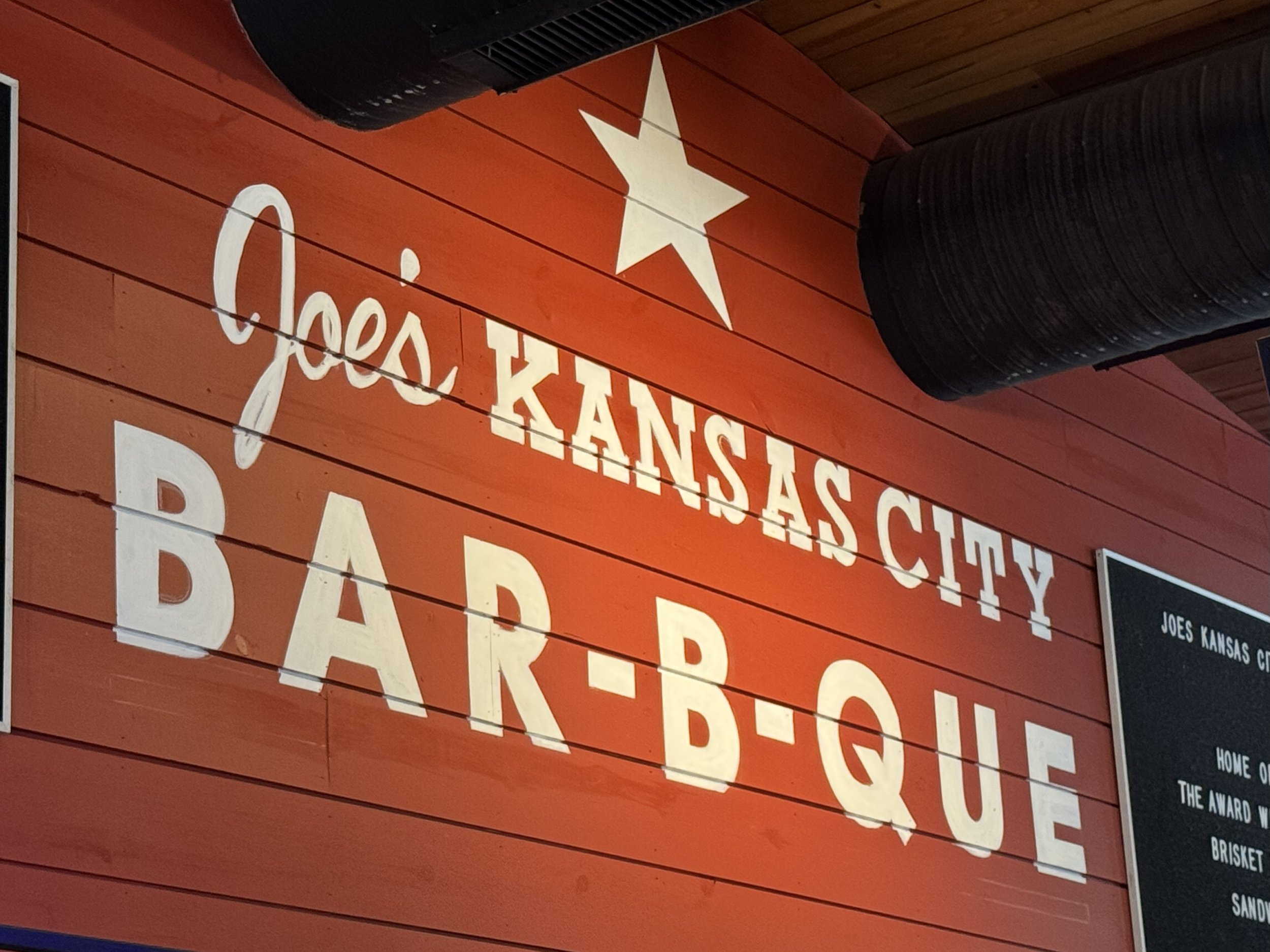
Dad and I both went with the barbecue platters with ribs, pulled pork, burnt ends, and spicy slaw. We were not disappointed.
Buck O'Neil Tribute Park
We made our way toward the Negro Leagues Baseball Museum, stopping first to look at Buck O’Neil Tribute Park, a beautiful little baseball field with murals honoring O’Neil and his fellow Black baseball pioneers. One of the murals is painted on the walls of the historic Paseo YMCA building, where the Negro National League was founded in 1920, making this the epicenter for Black professional baseball.
O’Neil became more widely known to the American public through his appearances on the Ken Burns documentary Baseball. His gifted storytelling, natural warmth, and good humor helped bring the legends of the Negro leagues to life for millions of baseball fans.
But O’Neil had already accomplished so much when that documentary aired. He played 10 seasons for the Kansas City Monarchs as a standout first baseman, sharing the dugout with legends like Satchell Paige and Cool Papa Bell, and he later managed the Monarchs for eight seasons. In 1962, O’Neil became the first African American coach in Major League Baseball history when he signed with the Chicago Cubs. He transitioned to scouting for the Cubs the following year and kept at it for another two decades.
There was quite a bit of street construction underway in the area surrounding the museum. We wound up getting detoured through a parking lot for the Kansas City Urban Youth Academy. Created in a partnership between Major League Baseball, the Kansas City Royals, the City of Kansas City, and the Major League Baseball Players Association, the academy provides free baseball and softball instruction for underserved youth, with a mission to develop the leaders of tomorrow through both sports and education.
Six weeks later, purely by chance, I found myself sitting next to Darwin Pennye, the founding Executive Director of the academy, at an Oakland Ballers game. He now scouts for the Royals and had come to see a few players in an independent Pioneer League game between the Ballers and the Colorado Springs Sky Sox.
Negro Leagues Baseball Museum
The Negro Leagues Baseball Museum is co-located with the American Jazz Museum (we only had time for one) in Kansas City’s historic 18th & Vine Jazz District. The museum celebrates the rich and joyous history of African American baseball from the late 1800s through integration in the 1950s.
Its centerpiece is a bronze sculpture group called “Field of Legends” — a ballfield populated by a lineup of Negro leagues greats, including Buck O’Neil at first, Cool Papa Bell in the outfield, and Satchell Paige on the mound.
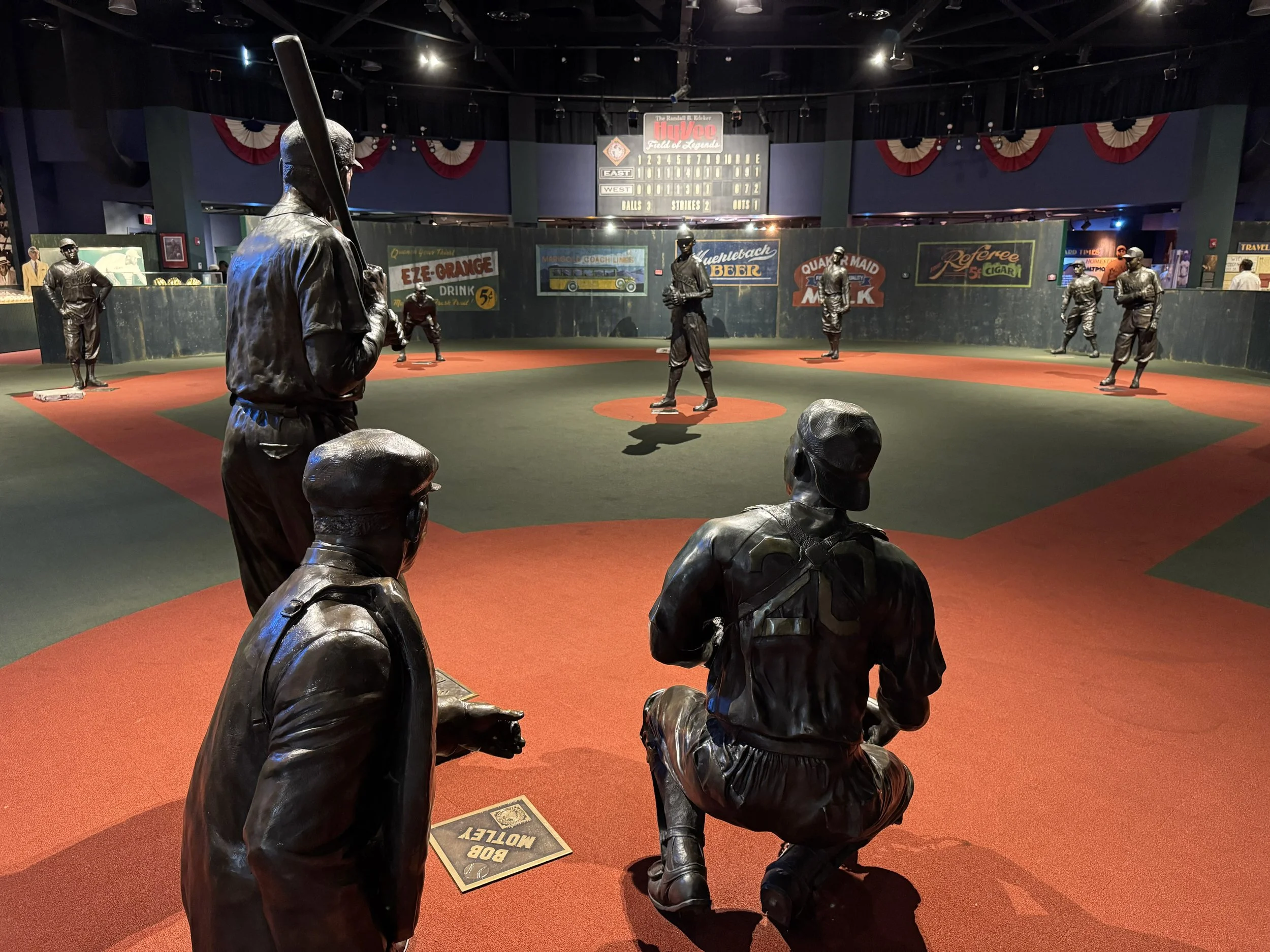
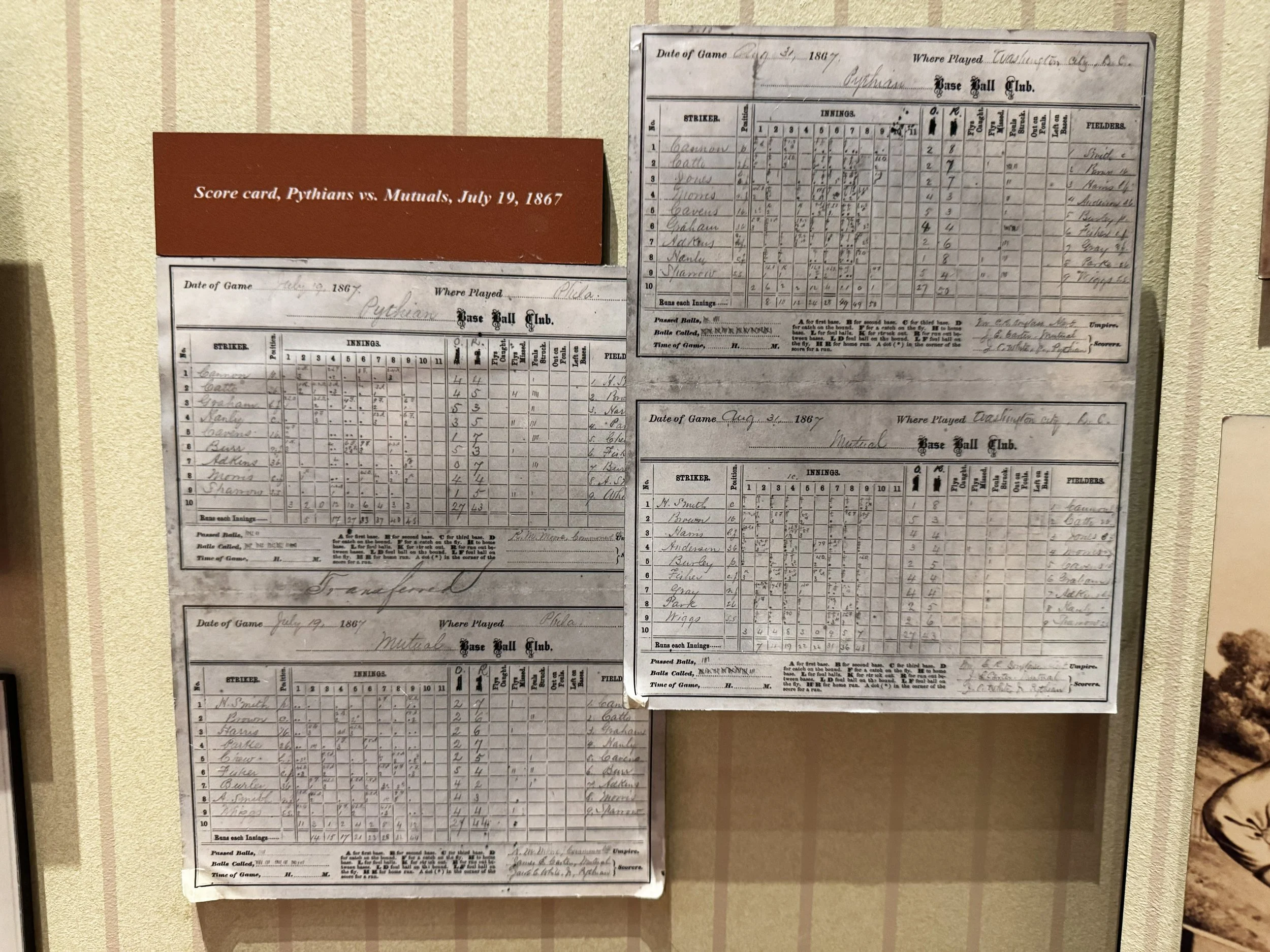
The museum presents its story chronologically, beginning with pioneers like Moses Fleetwood Walker, who became the first black man to play major league baseball when he appeared for the Toledo Blue Stockings in 1884; the Cuban Giants, the first all-black professional team; and a variety of semi-professional and company-sponsored teams like the Page Fence Giants.
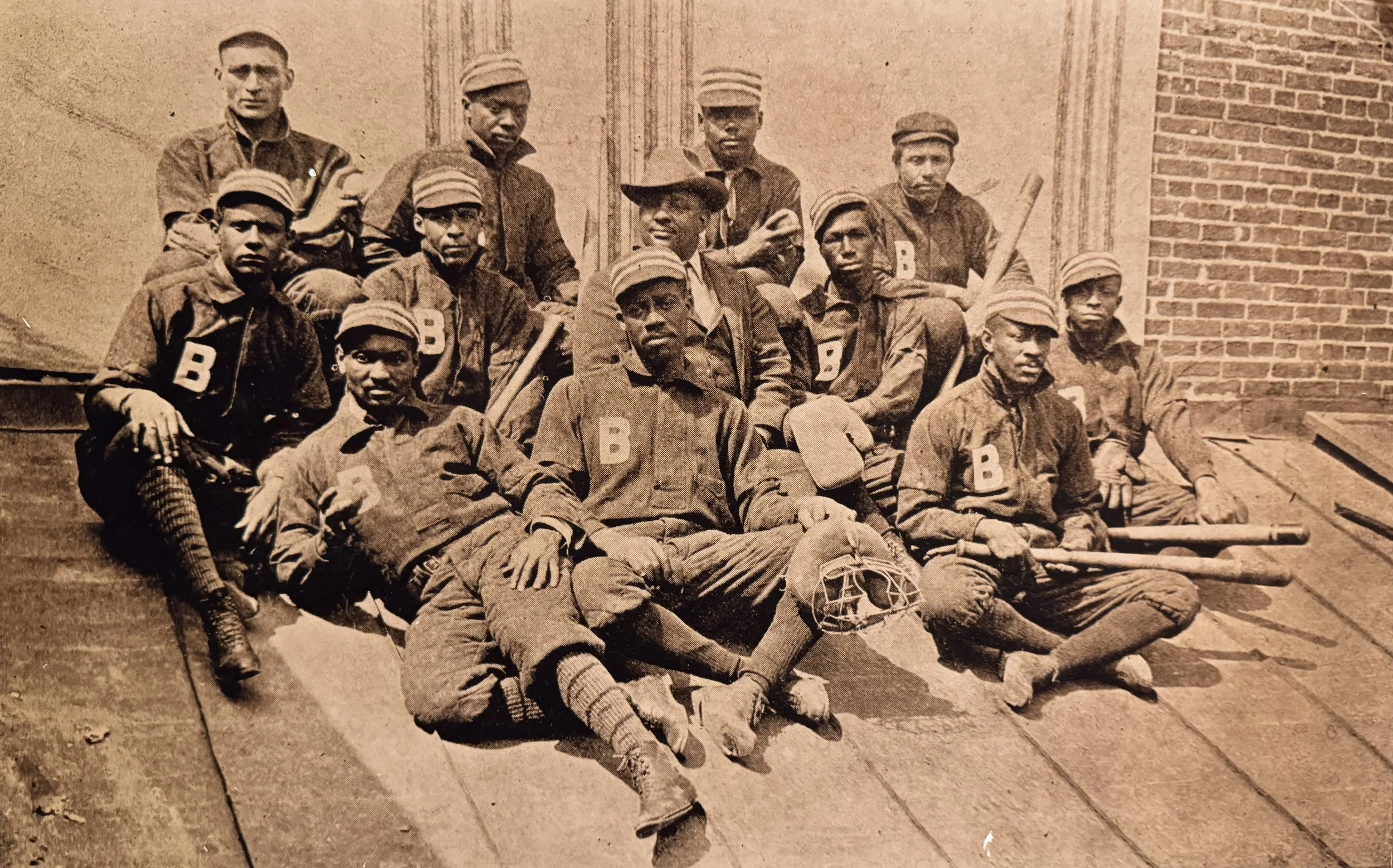
In the early 1900s, Rube Foster was one of the top pitchers in baseball, playing for the Chicago Union Giants, Cuban X-Giants (where he won 44 straight games in 1903), and Philadelphia Giants. Not enough Giants? Foster also pitched for and managed the Leland Giants and the Chicago American Giants through 1917, before retiring as a player. He continued to manage, building the Chicago American Giants into an early Black baseball dynasty, winning four league titles in the 1920s and the Negro World Series in 1926.
Foster organized the meeting at the Paseo YMCA that resulted in the founding of the Negro National League in 1920. His leadership helped bring structure and financial organization to the league, emphasizing Black ownership and control of teams that were now much more than independent barnstormers — they were institutions in the community.
For more than three decades, the Negro National League and five other Negro leagues brought baseball to more than 30 communities across the eastern half of the segregated United States.
Satchel Paige is featured for a good length of the museum’s timeline, given that his career extended from 1927 to 1953. The pitching legend played 16 years for six different Negro leagues teams — including three stints with the Kansas City Monarchs — and was an All-Star six times, putting up a cumulative 2.52 ERA on the mound.
As integration began, Paige moved on to Major League Baseball with the Cleveland Indians and St. Louis Browns, earning two All-Star appearances and a World Series title. Paige famously returned to play for one night with the Kansas City Athletics in 1965 at age 59 — the oldest pitcher in major league history. He gave up just one hit in three innings of work.
“I loved playing against Negro league teams, but I loved barnstorming. It gave us a chance to play everybody and go everywhere and let millions of people see what we could do. I just loved it. I’d have played every day of the year if I could.”
Satchel Paige
Satchel Paige
The museum includes a tribute to Toni Stone, whom we had learned about at the City of Baseball Museum inside CHS Field in St. Paul, Minnesota. At age 16, Stone barnstormed on weekends with the Twin City Colored Giants, earning $2 to $3 a game. She played for the amateur Negro league San Francisco Seals and New Orleans Creoles in the 1940s.
In 1953, Indianapolis Clowns owner Syd Pollock signed Stone to play second base for the team, making her the first woman to appear in a men’s professional league. She replaced a young talent signed by the Milwaukee Braves named Hank Aaron.
The museum also covers the breaking of the color barrier by Jackie Robinson and others, leading to the decline of the Negro leagues in the 1950s.
Negro Leagues Baseball Museum President Bob Kendrick, a fabulous storyteller in his own right, describes the museum not as a somber reflection of segregation’s ugliness, but as a celebration of the accomplishments — no, the triumphs — these individuals achieved in the face of such adversity. It conveys a sense of joy — for baseball, for its talented players, for the communities they served, and for the Negro leagues’ place of importance in American baseball history.
We made a brief stop in the museum store, and I may or may not have purchased my 21st hat of the road trip.
Homeward Bound
Dad and I drove from the museum straight to Kansas City International Airport, where we said our goodbyes and took perhaps the least flattering photograph of me ever — wild-eyed and unkempt — while Dad looked on in well-groomed splendor.
I didn’t care. I was flush with a sense of accomplishment, fulfilled by our bonding time traveling America, telling stories, learning and laughing, and reveling in the spirit of baseball. I can’t wait to do it again.
That night, ABC World News Tonight aired its Father’s Day story on our road trip, capturing the essence of our journey together and our love for minor league baseball. I hope you can take a few minutes to watch it.