Springfield Cardinals
Dad and I visit Hammons Field for a game between the Double-A Springfield Cardinals and the Northwest Arkansas Naturals.
We drove a few short blocks from our hotel to Hammons Field, home of the Double-A Springfield Cardinals, for the first of seven Minor League games on our road trip.
The ballpark is named for John Q. Hammons, a Missouri native who rose from relative poverty during the Great Depression to become a successful developer worth $300 million in 1987. Hammons financed 210 hotels in 40 states and was responsible for several landmark buildings around Springfield, including a convention center, performing arts hall, and the Missouri Sports Hall of Fame.
Opened in 2004, Hammons Field has 7,986 seats and can accommodate up to 10,486 fans. It’s also the home field for the Missouri State Bears.
Professional baseball in Springfield began in 1905 with the Springfield Highlanders, who were later named the Jobbers, Midgets, and Merchants. In 1931, the St. Louis Cardinals bought the club and changed its name to match their own moniker. The team won a Western Association title that year, and — with a front office led by future Hall-of-Famer Branch Rickey and on-field legends like Stan Musial and Dizzy Dean — went on to win four more league championships in that decade.
In 1946, the franchise relocated to St. Joseph, Missouri, playing at Phil Welch Stadium (now the home of the collegiate summer league St. Joseph Mustangs, who very nearly made our Western Midwest itinerary). In 1953, the Chicago Cubs hosted an affiliated team in Springfield for a single season. Then professional baseball in Springfield went quiet for 51 years.
The current Springfield Cardinals franchise took life in 2005 when the Major League Cardinals purchased the Double-A El Paso Diablos and moved them to the Midwest, completing Hammons’ goal of bringing a new club to his hometown in Springfield. They’ll remain there until at least 2038, following a deal between the city and the St. Louis Cardinals after Hammons’ death in 2013.
This iteration of the Springfield Cardinals had won just one league championship in 20 seasons when we arrived, despite hosting future big-league stars such as Yadier Molina, Adam Wainwright, Chris Carpenter, and Jack Flaherty. The club averaged 3,550 fans per game in 2025, eighth-best in the 10-team Texas League.
The Cardinals team store is just a few steps from the front gate. Dad and I went there immediately.
We found Springfield apparel and caps in Cardinals red, powder blue and “midnight navy blue,” plus options celebrating the team’s alternate identities, the Cashew Chickens and the Cardinales de Springfield — its Copa de la Diversión persona celebrating Latin culture.
I found the sweet powder-blue hat I had on my radar months before. Dad found his logo baseball du jour, and we were off to our seats.
The concourse was lively with canine activity. It was a “Woof Wednesday,” in which good dogs of all shapes and sizes are invited to the ballpark to enjoy a night out with their owners and a multitude of other pups. They could not have looked happier.
It was also a Worship Wednesday (in a symbiotic celebration of an alternate spelling of the letters “D-O-G”). A local church group, New Life Worship, played music atop the visiting dugout and led a session of praise for a section of devotees.
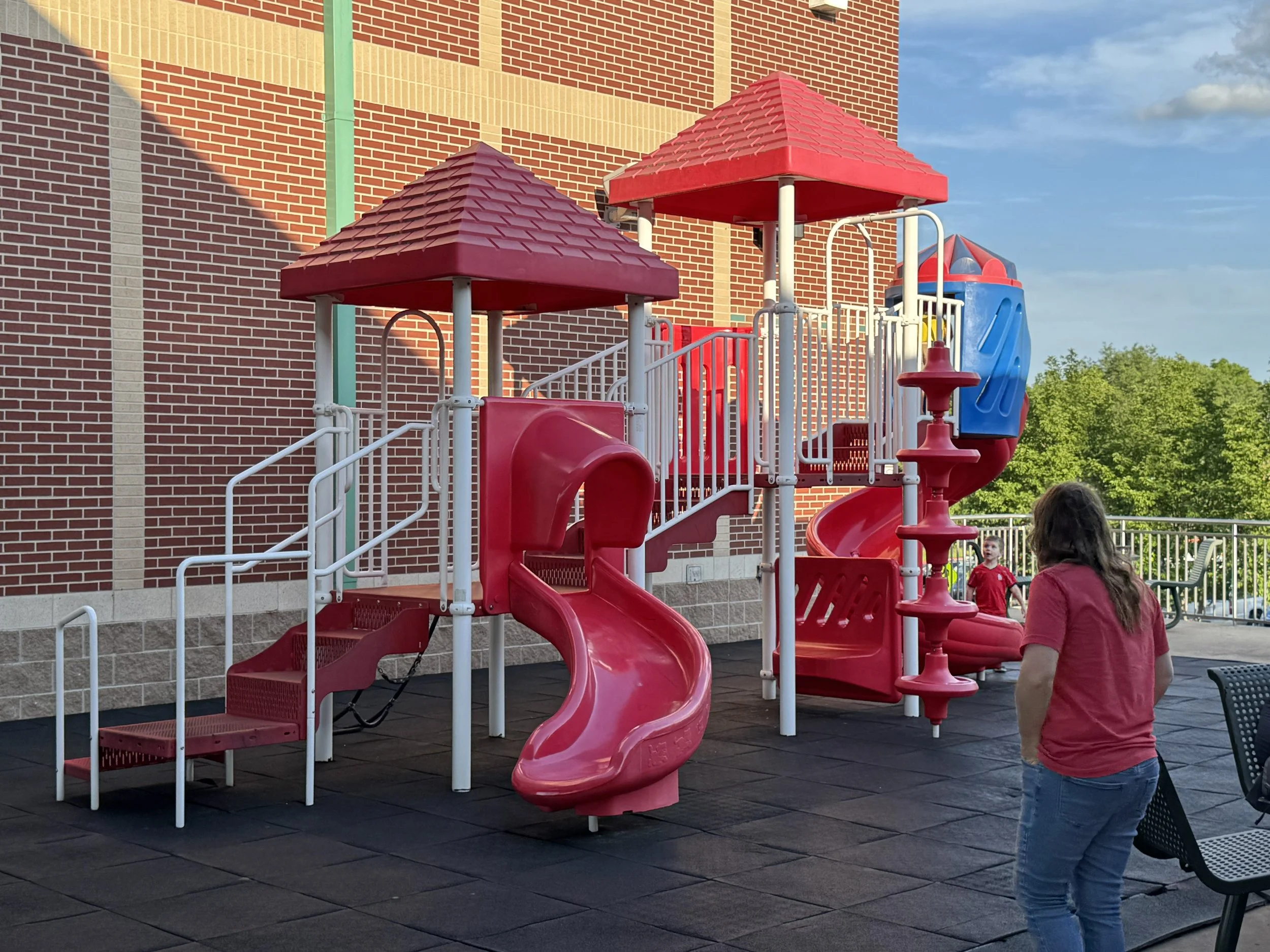
I took a quick walk down both lines and was pleased to see far more kids playing in the inflatable Cardinals bouncy house than sitting idly in the “ESports Gaming Zone.”
Events like Woof Wednesday — more commonly known as “Bark in the Park” — have become a staple of minor league ballparks. But the Cardinals did it right, not just letting the doggos in the park but allowing them to participate in a pooch parade around the warning track.
Springfield entered the game with a record of 24-21, good for first place in the Texas League North. Not a bad start, but it would pale in comparison with the remainder of what would be a historic season for the club. (More on that later.) The Cardinals were loaded with prospects, with five players on the roster listed in the top 11 in the St. Louis organization, including their #1 prospect, shortstop J.J. Wetherholt.
Center fielder Chase Davis, St. Louis’ #9 prospect at the time
Springfield would face the Northwest Arkansas Naturals, the Double-A affiliate of the Kansas City Royals, who began the day just a game behind the Cardinals. They’re based in Springdale, Arkansas, 140 miles southwest of Springfield and about 20 minutes south of the Walmart headquarters in Bentonville, Arkansas.
Little Leaguers from two different teams ran onto the field at each position to stand with their Minor League counterparts for the pre-game ceremonies. After a nice rendition of the National Anthem, we were underway.
Max Rajcic
Max Rajcic, a right-hander from Orange, California, and St. Louis’ #22 prospect, started things off for Springfield. He had been inconsistent in the early season, shutting teams out over five innings, then giving up six earned runs in two or three innings. This night was no different: After cruising through the first with a 1-2-3 inning, Rajcic gave up four hits and two runs in the second. Nevertheless, he showed enough promise by July to earn a promotion to the Triple-A Memphis Redbirds.
The Cardinals put up a run in the first, but it could have been more: After a bloop single by catcher Leonardo Bernal brought home a run, St. Louis #9 prospect, Chase Davis, doubled to right-center. Bernal apparently forgot he was a catcher and attempted to score from first. He was thrown out at the plate by about 10 feet.
The Naturals led 2-1 after two.
It was time to find dinner. I hoped to catch glimpse of the Cardinals Jumbo Spud Dog — a hot dog wrapped in a baked potato, topped with nacho cheese, sour cream, and bacon, and served with a spork — but they were not to be found.
However, my first choice was on the menu: The Cheesy Chicken Mac Stack: chicken strips, mac and cheese, french fries, nacho cheese, pickles, and ranch dressing stacked on a brioche bun. My one concern with this concoction was the french fries. As a native Southern Californian, I’d had fries in burritos a few times and always hated it — who would ruin a perfectly savory carne asada burrito with gummy starch?
But I have to say, this sandwich was surprisingly tasty — a seemingly random mélange of ingredients that collaborated pleasingly between the buns.
The Cardinals pushed a run across in the bottom of the third on a single by Davis, tying the score 2-2. Rajcic regained control on the mound, allowing a couple of singles but keeping the Naturals at bay.
We saw some quality between-inning games on the night: a costumed hot dog race with a hula-hoop requirement at the midway point; a husband and wife each digging candy worms out of a paper plate filled with whipped cream using only their faces; a ball toss into buckets made progressively easier, all for naught, as the contestant continued to fail; a dugout putting challenge that had a similar outcome; a pantomime surfing dance-off; a quality Dizzy Bat race that sent both contestants spinning into the padding along the left-field line; and, for Woof Wednesday, two dogs licking peanut butter off a plastic screen. (Watch the episode!)
Both Cardinals mascots were on the scene for the evening: Louie, a classic red cardinal; and Fetch, who appeared in 2006 as a “pet dog” for the bird. The two clowned together around on the concourse during breaks in the action.
Northwest Arkansas put together a couple of hits in the top of the fifth to take a 3-2 lead. The Cardinals struggled to answer as the sun set over Hammons Field.
For the second night in a row, the seventh-inning stretch irritated Dad. He likes to sing the song. He belts it out as best he can, with grand gestures at key moments, crescendoing into “the old… ball… game!” at the end, and punctuating his performance with a fist pump and a shouted “Yeah!” I film him each time, and — as an accomplished actor and director — he knows he’s being filmed and leans into it.
During our game in O’Fallon the night before, “Take Me Out to the Ballgame” was played in double-time. What is typically a slow, swaying song of camaraderie was played with an urgent tempo by someone with a plane to catch. It quickly became impossible to follow.
But at least there was music! In Springfield, they set the crowd off to sing with no music and no vocalist to set the tempo. “You know the words! Sing along!” the PA announcer implored. It was a discombobulated mess, with hundreds of fans each singing cautiously at their own pace, straining to hear where they should be in the song, and producing an incomprehensible murmur of disconnected notes.
In the bottom of the seventh, Wetherholt hit a grounder that looked ripe for an inning-ending double play, but a throwing error by Naturals shortstop Jack Pineda allowed a run to score, tying it 3-3.
I went for a walk around the 360-degree concourse in the top of the eighth, when the Naturals took control of the game. Two singles and an error brought home two runs, and the visitors were up 5-3.
There was a historic note to the night: Umpire Isabella Robb, working third base, became the first female umpire to appear in a game at Hammons Field. In 2018, Robb attended a one-day MLB Umpire Camp in her home city of Houston, Texas, which set her on a course to becoming a professional umpire in 2022. She started out umpiring Arizona Complex League games and had advanced to the Double-A level.
This is an example of the parallel career threads that give fascinating texture to Minor League Baseball. We focus on players honing their skills to get promoted up the ladder towards the majors, but the same progression, the same hopes and dreams, the same competition amongst peers is happening for umpires on the field, coaches in the dugout, and broadcasters in the press box.
Northwest Arkansas tacked on two more runs in the ninth, and Springfield had little response. The Naturals won it 7-3.
But the season did not go as the game went. The Naturals had a losing record for the remainder of the year and missed the playoffs. Springfield went on a tear, winning 19 of their next 23 games to finish the first half of the season in first place by six games. They were even better in the second half, posting a searing 45-24 record. The Cardinals swept the Tulsa Drillers in the first round of the playoffs, then took two of three from the Midland RockHounds in the championship series to win their second Texas League title in team history.